Treble Clef Notes
Learn the treble clef line notes EGBDF and space notes FACE, with simple tips and exercises to build faster note recognition.
What Are the Treble Clef Notes
The treble clef notes written directly on the five-line staff run from E4 to F5.
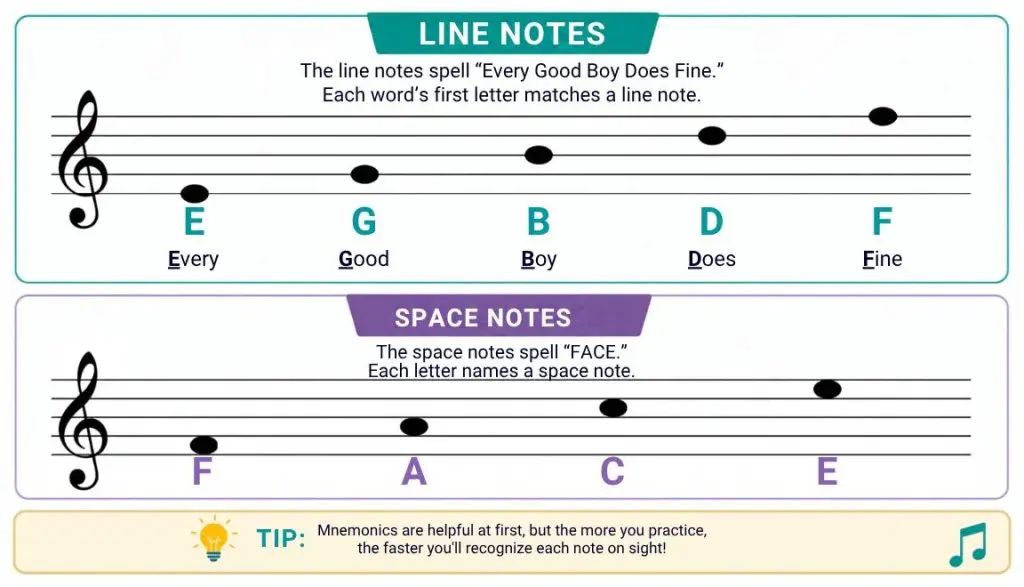
The five treble clef line notes, from bottom to top, are:
E – G – B – D – F
The four treble clef space notes, from bottom to top, are:
F – A – C – E
Moving through every line and space from the bottom of the staff to the top gives you:
E – F – G – A – B – C – D – E – F
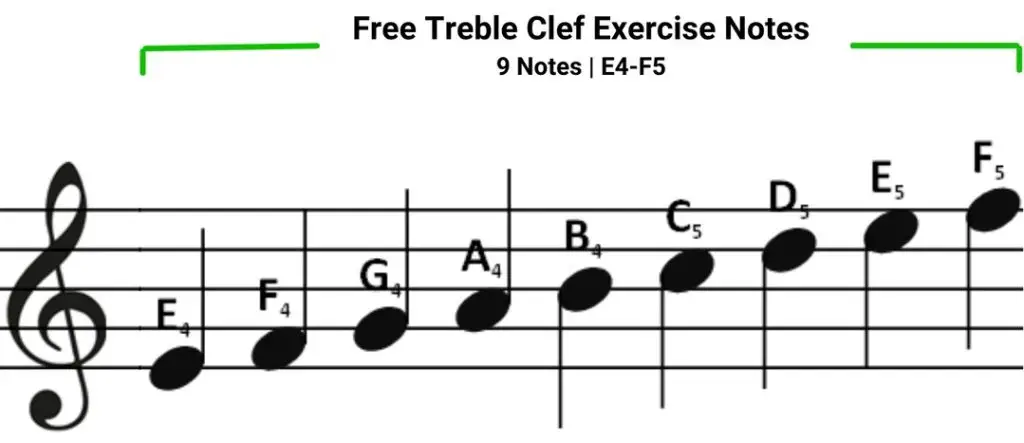
These nine positions make up the notes written directly on the treble staff. Notes can also extend above and below the staff using ledger lines.
How to Remember Beginner Treble Clef Notes
Many beginning music students first learn treble clef notes using simple mnemonic devices.
For the five line notes E, G, B, D, F, a common mnemonic is:
Every Good Boy Does Fine
The four space notes are even easier to remember because their letters spell:
F – A – C – E = FACE
Mnemonics are helpful when you’re first learning to read music, but eventually the goal is to recognize each note without having to repeat a phrase.
Consistent practice and repetition can help turn note identification into faster, more automatic note recognition.
Why is the Treble Clef Also Called the "G Clef"?
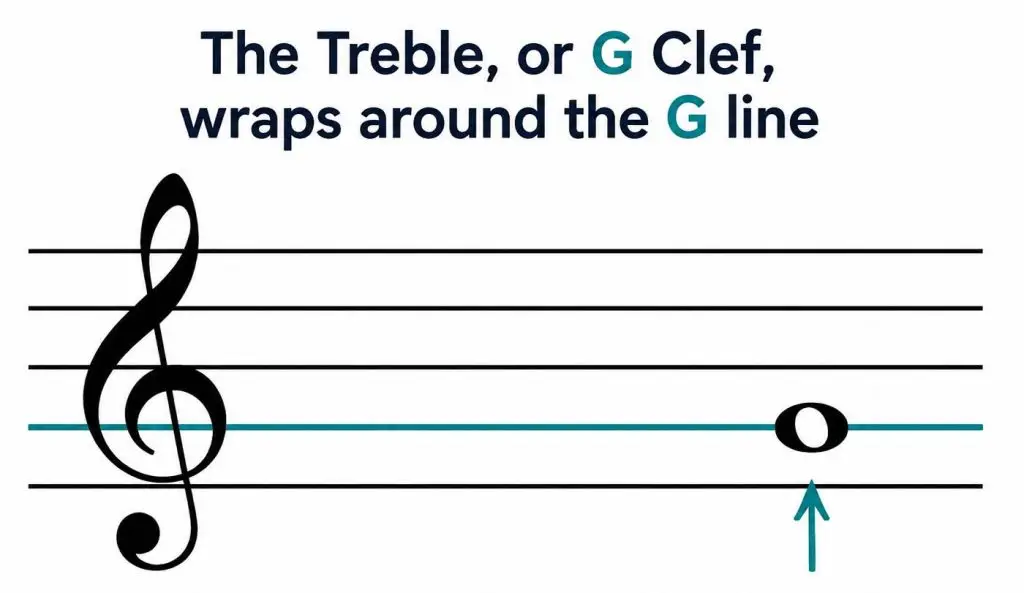
The treble clef is also known as the G clef.
The treble clef symbol curls around the second line of the staff, identifying that line as the note G. This is where the G clef gets its name.
Treble clef is generally used for higher-pitched notes and is one of the most common clefs students encounter when learning to read sheet music.
How Should You Practice Treble Clef Notes?
There are several ways to build stronger note-reading skills, including music theory books, flashcards, apps and games, and written note-reading exercises.
Each approach has different strengths. Music theory books provide broader instruction, flashcards are useful for quick memorization, apps can provide interactive feedback, and written exercises give students repeated practice identifying notes directly on the staff.
Many students benefit from combining more than one approach.
Build Faster Note Recognition with Notebusters
For students who want more structured practice, Notebusters workbooks help beginning and intermediate music students build faster, more confident note recognition through short, timed exercises, repetition, and randomly presented notes.
The chart below shows how the Notebusters workbook ranges expand beyond the 9 treble clef notes covered in the free exercises. Beginner editions focus on the note ranges used by specific instruments, while the Complete Edition provides broader practice across more than 30 notes on the treble, bass, and grand staves.
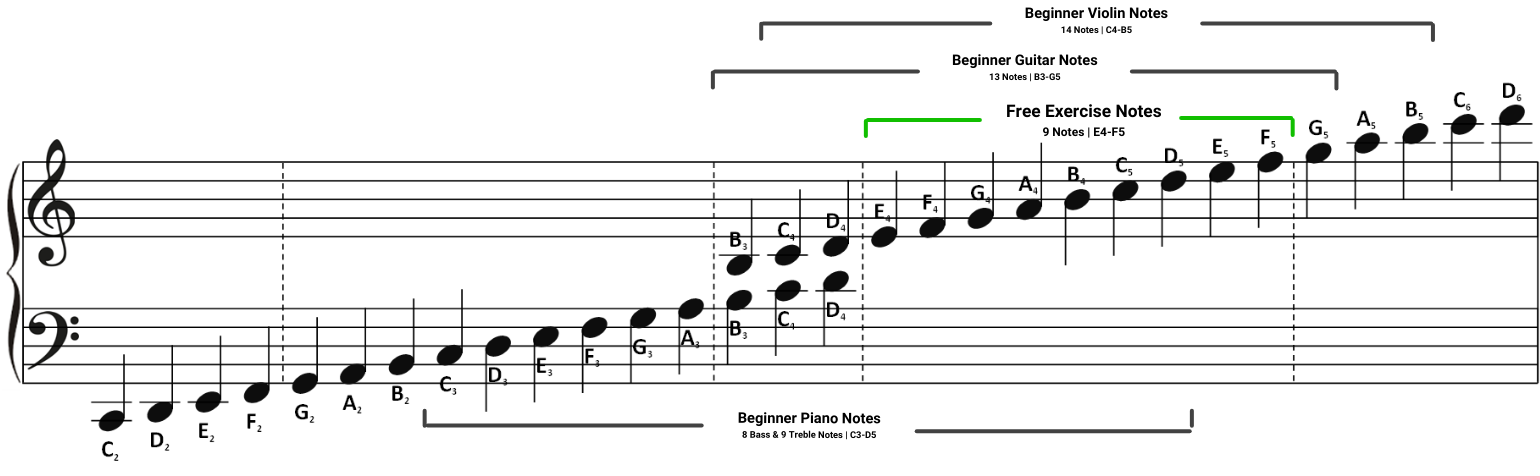
Notebusters workbooks support students learning piano, violin, guitar, bass, flute, trumpet, ukulele, and more. By presenting notes in random order instead of predictable patterns, the exercises help students practice recognizing each note on sight. Repeated one-minute exercises and scoring make it easy to track progress while building speed and fluency.
More than 40 million music notes have been identified by Notebusters students to date.
More Resources to Help Master Treble Clef Notes
Whether you’re a teacher, parent, or beginner musician, below is a full suite of free tools and articles to help build real music reading skills:
🎮 Play Note Dash | a fast-paced free music note reading game
🎼 Download free beginner sheet music | for piano and other instruments
✍️ How to teach kids to read sheet music | a helpful blog post for all parents
🤔 Sight-reading vs. note reading | a helpful blog post for new musicians